MoveMentor—examining the effectiveness of a machine learning and app-based digital assistant to increase physical activity in adults: protocol for a randomised controlled trial

Vandelanotte, C., Trost, S., Hodgetts, D., Imam, T., Rashid, M. M., To, Q. G., & Maher, C. (2025). MoveMentor—examining the effectiveness of a machine learning and app-based digital assistant to increase physical activity in adults: protocol for a randomised controlled trialTrials26(1), 233.

[Open Access] https://link.springer.com/article/10.1186/s13063-025-08926-3

Abstract
Physical inactivity is prevalent, leading to a high burden of disease and large healthcare costs. Thus, there is a need for affordable, effective and scalable interventions. However, interventions that are affordable and scalable are beset with modest effects and engagement. Interventions that integrate machine learning with real-time data to offer unprecedented levels of personalisation and customisation might offer solutions. The aim of this study is to conduct a randomised controlled trial to evaluate the effectiveness of a machine learning and app-based digital assistant to increase physical activity.

One hundred and ninety-eight participants will be recruited through Facebook advertisements and randomly allocated to an intervention or control group. Intervention participants will gain access to an app-based physical activity digital assistant that can learn and adapt in real-time to achieve high levels of personalisation and user engagement by virtue of applying a range of machine learning techniques (i.e. reinforcement learning, natural language processing and large language models). The digital assistant will interact with participants in 3 main ways:(1) educational conversations about physical activity; (2) just-in-time personalised in-app notifications (‘nudges’), cues to action encouraging physical activity and (3) chat-based questions and answers about physical activity. Additionally, the app includes adaptive goal setting and an action planning tool. The control group will gain access to the intervention after the last assessment. Outcomes will be measured at baseline, 3 and 6 months. The primary outcome
is device-measured (Axivity AX3) moderate-to-vigorous physical activity. Secondary outcomes include app engagement and retention, quality of life, depression, anxiety, stress, sitting time, sleep, workplace productivity, absenteeism,
presenteeism and habit strength.
The trial presents a unique opportunity to study the effectiveness of a new generation of digital interventions that use advanced machine learning methods to improve physical activity behaviour. By addressing the limitations of existing conversational agents, we aim to pave the way for more effective and adaptable interventions.


Trial registration Australian New Zealand Clinical Trial Registry ACTRN12624000255583p. Registered on 14 March

  1. https://www.anzctr.org.au/Trial/Registration/TrialReview.aspx?id=387332

Impact of Iterative Development and Beta-Testing on the Usability and Acceptability of a Novel Just-in-Time Adaptive Digital Physical Activity Intervention

Vandelanotte, C., Maher, C., Hodgetts, D., Imam, T., Rashid, M., To, Q. G., & Trost, S. (2025). Impact of Iterative Development and Beta-Testing on the Usability and Acceptability of a Novel Just-in-Time Adaptive Digital Physical Activity InterventionJournal of Physical Activity and Health1(aop), 1-7.

[Open Access] https://journals.humankinetics.com/view/journals/jpah/22/10/article-p1315.xml

Abstract

The search for cost-effective population-based physical activity interventions continues. Therefore, we developed a novel just-in-time adaptive digital assistant supported by machine learning (ie, MoveMentor). Beta-testing is essential to evaluate both technical performance and user acceptance. The aim of this study was to assess app usability, acceptability, and technical performance through iterative rounds of beta-testing.

Insufficiently active people (age: 39.8 [10.2]; 86% female) participated in 2 rounds of beta-testing (round 1, n = 112; round 2, n = 41). Participants downloaded the digital assistant app onto their phone to use during the study period (round 1: 12 wk, round 2: 4 wk). Participants were asked complete at least 4 educational and 5 chat conversations, rate over 50 notifications, and complete an online follow-up survey at week 4 examining aspects of app usability and acceptability. Descriptive statistics and t tests were used to analyze outcomes.

Across both rounds, the app demonstrated good overall usability scores (System Usability Scale: 75.3 out of 100) but lower usefulness ratings. Round 2 participants showed increased engagement with features including action plans ( P  < .001), educational conversations ( P  < .001), and personalization features ( P  < .001), and they appreciated the educational conversations more ( P  < .05). Technical issues including data syncing problems and chat limitations persisted across both rounds. The notification system received mixed feedback, though customization options in round 2 reduced complaints (12.2%–7.3%).

The app demonstrated good acceptability and usability but low usefulness. The iterative beta-testing successfully identified areas for improvement and enabled meaningful enhancements to content and user engagement features. While some technical challenges persisted, the beta-testing provided clear direction for ongoing improvements.

Perceptions and expectations of an artificially intelligent physical activity digital assistant — A focus group study

Vandelanotte, C., Hodgetts, D., Peris, D. L. I. H. K., Karki, A., Maher, C., Imam, T., … & Trost, S. (2024). Perceptions and expectations of an artificially intelligent physical activity digital assistant—A focus group studyApplied Psychology: Health and Well‐Being16(4), 2362-2380.

[Open Access] https://iaap-journals.onlinelibrary.wiley.com/doi/full/10.1111/aphw.12594

Abstract

Artificially intelligent physical activity digital assistants that use the full spectrum of machine learning capabilities have not yet been developed and examined.

This study aimed to explore potential users’ perceptions and expectations of using such a digital assistant. Six 90-min online focus group meetings (n = 45 adults) were conducted. Meetings were recorded, transcribed and thematically analysed.

Participants embraced the idea of a ‘digital assistant’ providing physical activity support. Participants indicated they would like to receive notifications from the digital assistant, but did not agree on the number, timing, tone and content of notifications. Likewise, they indicated that the digital assistant’s personality and appearance should be customisable. Participants understood the need to provide information to the digital assistant to allow for personalisation, but varied greatly in the extent of information that they were willing to provide.

Privacy issues aside, participants embraced the idea of using artificial intelligence or machine learning in return for a more functional and personal digital assistant.

In sum, participants were ready for an artificially intelligent physical activity digital assistant but emphasised a need to personalise or customise nearly every feature of the application. This poses challenges in terms of cost and complexity of developing the application.

Sport Participation Legacy and the Olympic Games: The Case of Sydney 2000, London 2012, and Rio 2016

Reis, A. C., Frawley, S., Hodgetts, D., Thomson, A., & Hughes, K. (2017). Sport Participation Legacy and the Olympic Games: The Case of Sydney 2000, London 2012, and Rio 2016. Event Management, 21(2), 139–158. http://doi.org/10.3727/152599517X14878772869568

Sport participation as a legacy of the Olympic Games (OG) has frequently featured as a component of the “legacy package” that government bodies and organizing committees promote to the local communities to gain support for the hosting of these mega-events. However, only recently increased sport participation has been explicitly included as part of a legacy plan in OG candidature files. This article examines the changes and development of sport legacy planning and implementation from Sydney 2000, London 2012, and Rio 2016. The three case studies confirm that sport participation legacies are only achieved if host governments engage the community, develop long-term strategies, and coordinate efforts between different government portfolios and with a range of relevant stakeholders. So far, there is limited evidence available to demonstrate that relevant government bodies have attempted to strategically leverage the Games with the purpose of developing a sport participation legacy for the wider population.

Examining the plumbing: looking at the inhibitors and enablers of the trickle down effect

This post is my presentation from the Sport Management Association of Australia and New Zealand (SMAANZ) 2015 Conference.

This post contains the abstract and slides.

Hodgetts, D. (2015). Examining the plumbing: looking at the inhibitors and enablers of the trickle down effect. Paper presented at the Sport Management Association of Australia New Zealand Conference, Hobart, Australia. Continue reading Examining the plumbing: looking at the inhibitors and enablers of the trickle down effect

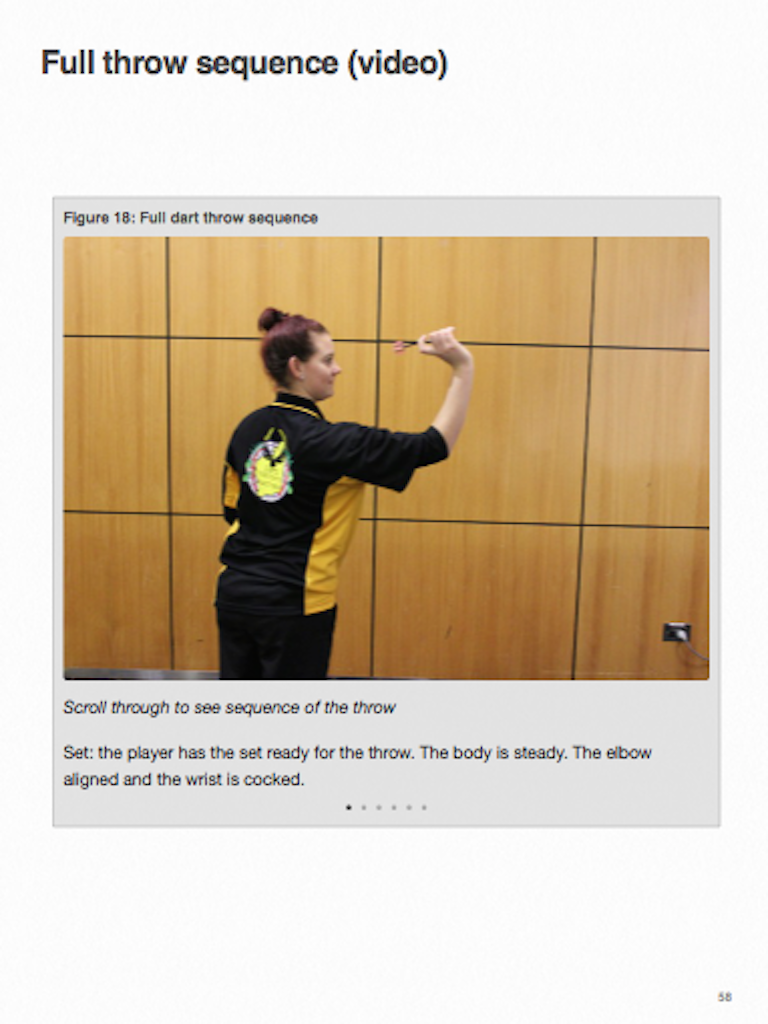
Darts technical manual

Darts Manual cover

This manual offers in depth explanation of the game of darts and darts technique. The manual also includes darts specific coaching information on: skill acquisition, physiology, psychology, planning training, coaching children, coaching players with a disability, training game and drills and tournament strategies.

The manual is available in eBook format from the iTunes storeContinue reading Darts technical manual

Quantitative analysis of sport development event legacy: an examination of the Australian Surf Life Saving Championships

Hodgetts, D., & Duncan, M. J. (2015). Quantitative analysis of sport development event legacy: an examination of the Australian Surf Life Saving Championships. European Sport Management Quarterly, 1–17. doi:10.1080/16184742.2015.1021824

Please click here for a copy of the Author’s Accepted Manuscript.

Research question: This study explores whether the conduct of an unleveraged major event, the Australian Surf Life Saving Championships, leaves a legacy in terms of making a contribution towards the ongoing sport development of surf life-saving. This is an area of event legacy research that has received little empirical research.
Research methods: Secondary data sources from the event host organisation were used as indicators of sport development. Regression analysis, adjusting for changes in the outcome variable outside of the host location (Perth, Western Australia), was used to identify if hosting the event was associated with changes in indicators of attracting, retention and nurturing of sport members in the host location.
Results and findings: The only significant adjusted results were a decrease in membership for the host club and an increase in competitor numbers for Western Australia and the Perth metropolitan area, suggesting hosting the event offered some retention and nurturing opportunities for sport development.
Implications: This study contributes to sport event legacy literature through examining a non-mega, single sport event and its effects on sport development and suggests that hosting the event only had a limited effect on indicators of sport development. The study uses a regression analysis method that could be used to examine legacy from other events.

A major sporting event can leave a media legacy: a content analysis of print media resulting from the Australian Surf Life Saving Championships at Scarborough, Western Australia

This post is my presentation from the Sport Management Association of Australia and New Zealand (SMAANZ) 2014 Conference.

The post contains the abstract, with presentation video and slides being added after the conference.

Hodgetts, D., & Duncan, M. (2014). A major sporting event can leave a media legacy: a content analysis of print media resulting from the Australian Surf Life Saving Championships at Scarborough, Western Australia. Paper presented at the Sport Management Association of Australia New Zealand Conference, Melbourne, Australia. Continue reading A major sporting event can leave a media legacy: a content analysis of print media resulting from the Australian Surf Life Saving Championships at Scarborough, Western Australia

Lessons Learned From the Trial of a Cardiometabolic Health Nurse

Happell, B., Hodgetts, D., Stanton, R., Millar, F., Platania Phung, C., & Scott, D. (2014). Lessons Learned From the Trial of a Cardiometabolic Health Nurse. Perspectives in Psychiatric Care, n/a–n/a. doi:10.1111/ppc.12091

Continue reading Lessons Learned From the Trial of a Cardiometabolic Health Nurse

Sport mega-events and a legacy of increased mass participation in sport: reflecting on the London 2012 Olympic and Paralympic Games

From the Oxford Brookes University 2012 – Legacies for Learning series

Hughes, K., & Hodgetts, D. (2014, May 11). Sport mega-events and a legacy of increased mass participation in sport: reflecting on the London 2012 Olympic and Paralympic Games. Oxford Brookes University. Retrieved November 2, 2014, from https://radar.brookes.ac.uk/radar/items/abd4432c-d2d0-07e8-2da6-edf9a3740f41/1/ Continue reading Sport mega-events and a legacy of increased mass participation in sport: reflecting on the London 2012 Olympic and Paralympic Games