MoveMentor—examining the effectiveness of a machine learning and app-based digital assistant to increase physical activity in adults: protocol for a randomised controlled trial

Vandelanotte, C., Trost, S., Hodgetts, D., Imam, T., Rashid, M. M., To, Q. G., & Maher, C. (2025). MoveMentor—examining the effectiveness of a machine learning and app-based digital assistant to increase physical activity in adults: protocol for a randomised controlled trialTrials26(1), 233.

[Open Access] https://link.springer.com/article/10.1186/s13063-025-08926-3

Abstract
Physical inactivity is prevalent, leading to a high burden of disease and large healthcare costs. Thus, there is a need for affordable, effective and scalable interventions. However, interventions that are affordable and scalable are beset with modest effects and engagement. Interventions that integrate machine learning with real-time data to offer unprecedented levels of personalisation and customisation might offer solutions. The aim of this study is to conduct a randomised controlled trial to evaluate the effectiveness of a machine learning and app-based digital assistant to increase physical activity.

One hundred and ninety-eight participants will be recruited through Facebook advertisements and randomly allocated to an intervention or control group. Intervention participants will gain access to an app-based physical activity digital assistant that can learn and adapt in real-time to achieve high levels of personalisation and user engagement by virtue of applying a range of machine learning techniques (i.e. reinforcement learning, natural language processing and large language models). The digital assistant will interact with participants in 3 main ways:(1) educational conversations about physical activity; (2) just-in-time personalised in-app notifications (‘nudges’), cues to action encouraging physical activity and (3) chat-based questions and answers about physical activity. Additionally, the app includes adaptive goal setting and an action planning tool. The control group will gain access to the intervention after the last assessment. Outcomes will be measured at baseline, 3 and 6 months. The primary outcome
is device-measured (Axivity AX3) moderate-to-vigorous physical activity. Secondary outcomes include app engagement and retention, quality of life, depression, anxiety, stress, sitting time, sleep, workplace productivity, absenteeism,
presenteeism and habit strength.
The trial presents a unique opportunity to study the effectiveness of a new generation of digital interventions that use advanced machine learning methods to improve physical activity behaviour. By addressing the limitations of existing conversational agents, we aim to pave the way for more effective and adaptable interventions.


Trial registration Australian New Zealand Clinical Trial Registry ACTRN12624000255583p. Registered on 14 March

  1. https://www.anzctr.org.au/Trial/Registration/TrialReview.aspx?id=387332

Impact of Iterative Development and Beta-Testing on the Usability and Acceptability of a Novel Just-in-Time Adaptive Digital Physical Activity Intervention

Vandelanotte, C., Maher, C., Hodgetts, D., Imam, T., Rashid, M., To, Q. G., & Trost, S. (2025). Impact of Iterative Development and Beta-Testing on the Usability and Acceptability of a Novel Just-in-Time Adaptive Digital Physical Activity InterventionJournal of Physical Activity and Health1(aop), 1-7.

[Open Access] https://journals.humankinetics.com/view/journals/jpah/22/10/article-p1315.xml

Abstract

The search for cost-effective population-based physical activity interventions continues. Therefore, we developed a novel just-in-time adaptive digital assistant supported by machine learning (ie, MoveMentor). Beta-testing is essential to evaluate both technical performance and user acceptance. The aim of this study was to assess app usability, acceptability, and technical performance through iterative rounds of beta-testing.

Insufficiently active people (age: 39.8 [10.2]; 86% female) participated in 2 rounds of beta-testing (round 1, n = 112; round 2, n = 41). Participants downloaded the digital assistant app onto their phone to use during the study period (round 1: 12 wk, round 2: 4 wk). Participants were asked complete at least 4 educational and 5 chat conversations, rate over 50 notifications, and complete an online follow-up survey at week 4 examining aspects of app usability and acceptability. Descriptive statistics and t tests were used to analyze outcomes.

Across both rounds, the app demonstrated good overall usability scores (System Usability Scale: 75.3 out of 100) but lower usefulness ratings. Round 2 participants showed increased engagement with features including action plans ( P  < .001), educational conversations ( P  < .001), and personalization features ( P  < .001), and they appreciated the educational conversations more ( P  < .05). Technical issues including data syncing problems and chat limitations persisted across both rounds. The notification system received mixed feedback, though customization options in round 2 reduced complaints (12.2%–7.3%).

The app demonstrated good acceptability and usability but low usefulness. The iterative beta-testing successfully identified areas for improvement and enabled meaningful enhancements to content and user engagement features. While some technical challenges persisted, the beta-testing provided clear direction for ongoing improvements.

Perceptions and expectations of an artificially intelligent physical activity digital assistant — A focus group study

Vandelanotte, C., Hodgetts, D., Peris, D. L. I. H. K., Karki, A., Maher, C., Imam, T., … & Trost, S. (2024). Perceptions and expectations of an artificially intelligent physical activity digital assistant—A focus group studyApplied Psychology: Health and Well‐Being16(4), 2362-2380.

[Open Access] https://iaap-journals.onlinelibrary.wiley.com/doi/full/10.1111/aphw.12594

Abstract

Artificially intelligent physical activity digital assistants that use the full spectrum of machine learning capabilities have not yet been developed and examined.

This study aimed to explore potential users’ perceptions and expectations of using such a digital assistant. Six 90-min online focus group meetings (n = 45 adults) were conducted. Meetings were recorded, transcribed and thematically analysed.

Participants embraced the idea of a ‘digital assistant’ providing physical activity support. Participants indicated they would like to receive notifications from the digital assistant, but did not agree on the number, timing, tone and content of notifications. Likewise, they indicated that the digital assistant’s personality and appearance should be customisable. Participants understood the need to provide information to the digital assistant to allow for personalisation, but varied greatly in the extent of information that they were willing to provide.

Privacy issues aside, participants embraced the idea of using artificial intelligence or machine learning in return for a more functional and personal digital assistant.

In sum, participants were ready for an artificially intelligent physical activity digital assistant but emphasised a need to personalise or customise nearly every feature of the application. This poses challenges in terms of cost and complexity of developing the application.

Increasing physical activity using an just-in-time adaptive digital assistant supported by machine learning: a novel approach for hyper-personalised mHealth interventions

Vandelanotte, C., Trost, S., Hodgetts, D., Imam, T., Rashid, M., To, Q. G., & Maher, C. (2023). Increasing physical activity using an just-in-time adaptive digital assistant supported by machine learning: a novel approach for hyper-personalised mHealth interventionsJournal of Biomedical Informatics144, 104435.

[Open Access] https://www.sciencedirect.com/science/article/pii/S1532046423001569 

Abstract
Physical inactivity is a leading modifiable cause of death and disease worldwide. Population-based interventions to increase physical activity are needed. Existing automated expert systems (e.g., computer-tailored interventions) have significant limitations that result in low long-term effectiveness. Therefore, innovative approaches are needed. This special communication aims to describe and discuss a novel mHealth intervention approach that proactively offers participants with hyper-personalised intervention content adjusted in real-time.

Using machine learning approaches, we propose a novel physical activity intervention approach that can learn and adapt in real-time to achieve high levels of personalisation and user engagement, underpinned by a likeable digital assistant. It will consist of three major components: (1) conversations: to increase user’s knowledge on a wide range of activity-related topics underpinned by Natural Language Processing; (2) nudge engine: to provide users with hyper-personalised cues to action underpinned by reinforcement learning (i.e., contextual bandit) and integrating real-time data from activity tracking, GPS, GIS, weather, and user provided data; (3) Q&A: to facilitate users asking any physical activity related questions underpinned by generative AI (e.g., ChatGPT, Bard) for content generation.

The detailed concept of the proposed physical activity intervention platform demonstrates the practical application of a just-in-time adaptive intervention applying various machine learning techniques to deliver a hyper-personalised physical activity intervention in an engaging way. Compared to traditional interventions, the novel platform is expected to show potential for increased user engagement and long-term effectiveness due to: (1) using new variables to personalise content (e.g., GPS, weather), (2) providing behavioural support at the right time in real-time, (3) implementing an engaging digital assistant and (4) improving the relevance of content through applying machine learning algorithms.

The use of machine learning is on the rise in every aspect of today’s society, however few attempts have been undertaken to harness its potential to achieve health behaviour change. By sharing our intervention concept, we contribute to the ongoing dialogue on creating effective methods for promoting health and well-being in the informatics research community. Future research should focus on refining these techniques and evaluating their effectiveness in controlled and real-world circumstances.

Brain Foundation urging awareness of often under-diagnosed cerebrospinal fluid leaks

Article on ABC about my CSF Leak journey and how academia helped me.

Six years ago, Danya Hodgetts was struck by a debilitating headache that would not go away… [read more]

Sport Participation Legacy and the Olympic Games: The Case of Sydney 2000, London 2012, and Rio 2016

Reis, A. C., Frawley, S., Hodgetts, D., Thomson, A., & Hughes, K. (2017). Sport Participation Legacy and the Olympic Games: The Case of Sydney 2000, London 2012, and Rio 2016. Event Management, 21(2), 139–158. http://doi.org/10.3727/152599517X14878772869568

Sport participation as a legacy of the Olympic Games (OG) has frequently featured as a component of the “legacy package” that government bodies and organizing committees promote to the local communities to gain support for the hosting of these mega-events. However, only recently increased sport participation has been explicitly included as part of a legacy plan in OG candidature files. This article examines the changes and development of sport legacy planning and implementation from Sydney 2000, London 2012, and Rio 2016. The three case studies confirm that sport participation legacies are only achieved if host governments engage the community, develop long-term strategies, and coordinate efforts between different government portfolios and with a range of relevant stakeholders. So far, there is limited evidence available to demonstrate that relevant government bodies have attempted to strategically leverage the Games with the purpose of developing a sport participation legacy for the wider population.

Nike’s new high-performance product aimed at Muslim athletes

An article on the “Nike Pro Hijab” in The New Daily

http://thenewdaily.com.au/sport/sport-focus/2017/03/08/nike-hijab/

Dr Hodgetts said Nike’s campaign was smart and, crucially, authentic. “What they have done is use people in their marketing who will actually use it …

It is time to toe the line

Article in the Bundaberg News Mail 06/03/2017 about sideline parenting and the Australian Sports Commission’s Let Kids Be Kids program.

https://www.news-mail.com.au/news/parents-need-to-toe-the-line/3151100/

Beach creche helps Queensland mums hit the surf

Exceprt from ABC Capricornia, read the full article here.

A group of mothers have combined playgroup with stand-up paddleboarding to increase fitness and health in a central Queensland coastal town.

The not-for-profit organisation Surfing Mums Australia has groups across the country that provide the opportunity for mothers to surf while their children are cared for.

SMA secretary Dr Danya Hodgetts said the Yeppoon Main Beach in central Queensland does not always cater to surfers, so the local group has had to adapt.

“Because there’s not really great waves, we’re doing stand-up paddleboarding,” she said.

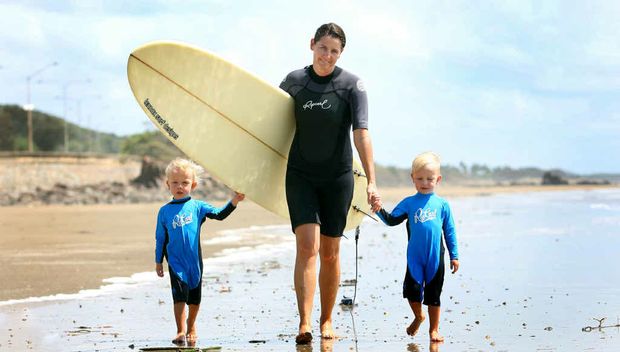
Mums getting fit and a bit of ‘vitamin sea’

FOR a lot of parents, it can be difficult to find the time to exercise. Mother of three Dr Danya Hodgetts found this out the hard way, when she wanted to work out – but it wasn’t as easy as it sounded.

From The Morning Bulletin: Mums getting fit and a bit of ‘vitamin sea’

RMB_07-02-2014_INDEX_01_ROK060214csurf6_t620