Sydney 2000 Volunteers. A decade of wasted legacy?

Closing Ceremony:
Sydney 2000

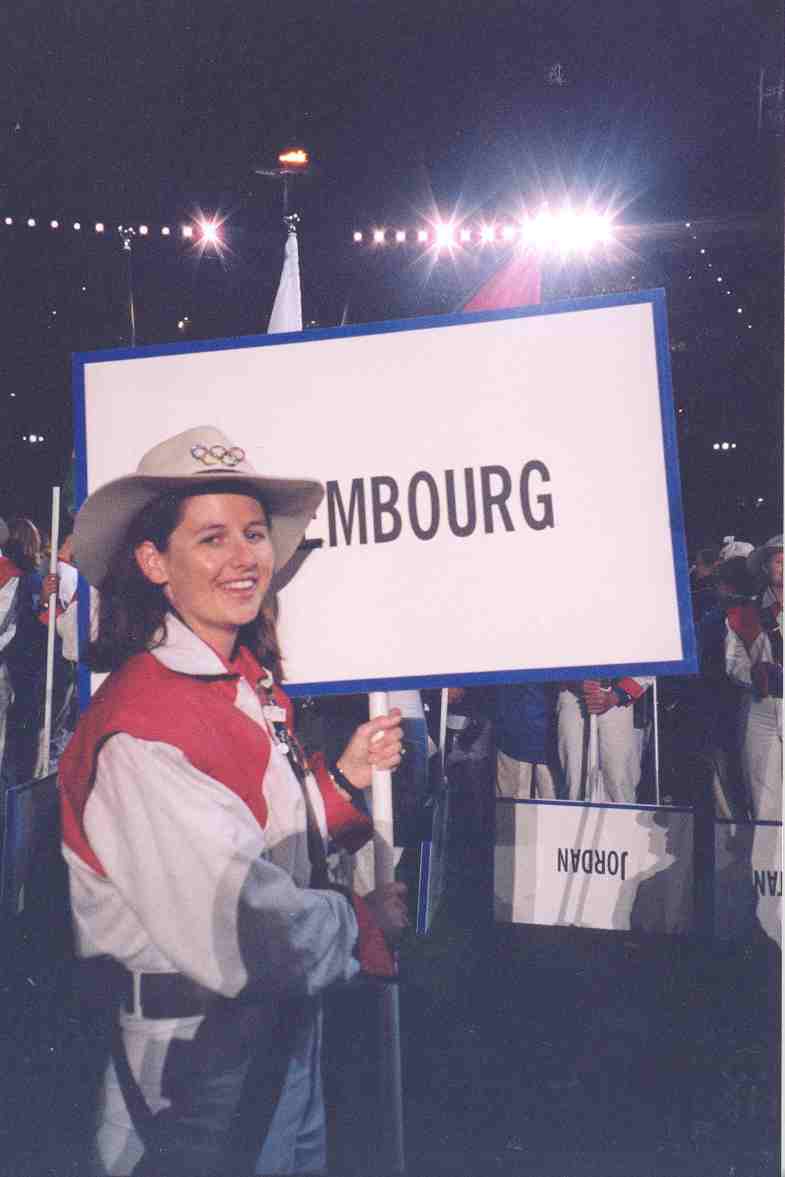
This week saw the 10 year anniversary of the Opening Ceremony of the Sydney 200o Olympic Games. A commemorative ceremony was held at the Olympic Stadium. Volunteers were excited there was finally a (semi) valid reason to get their uniforms out of mothballs and don them once again. It’s no coincidence that Lord Coe and the London 2012 team are in Sydney, hoping to emulate the magic that the volunteers added to the games.

I was one of the 45,000-odd people who took some time off work and volunteered, carrying a placard in the opening and closing ceremonies and working with doping control during the Olympic and Paralympic Games. I knew it would be a once-in-a-lifetime experience. And it was. Continue reading Sydney 2000 Volunteers. A decade of wasted legacy?

PhD on Event Legacy: results from a preliminary study

Build it and they will come? An analysis of the impact of the Australian Surf Life Saving Championships in Scarborough, Western Australia on sport development (a research summary*)

It is commonly believed that major sporting events should provide ongoing benefits, including increased participation in the sport and physical activity in general. This is becoming an increasingly important aspect of hosting a major sporting event and it is commonly recommended that event organisers consider how a major event can benefit the development of the sport. In terms of providing ongoing legacies, it is not a case of “build it [an event] and they [legacies] will come”; a conscious, sustained effort is required in order to create a legacy that will benefit sport. Continue reading PhD on Event Legacy: results from a preliminary study

It’s in our hands: my World Cup legacy

There’s a small event on at the moment. It may have just brushed the realms of your outermost consciousness. It’s the FIFA World Cup.

My PhD research is in the area of event legacy – the impact and change that events have. My specific area is in community sport/sport development – so in this current example, will Football in South Africa be played more? Have better coaches/officials? More members and supporters?

Continue reading It’s in our hands: my World Cup legacy

It’s time the pyramid was turned upside down – why the Crawford Report has got it right

If you think of sport as a pyramid, there are us sporting try-hards at the bottom; those that do it for fun, fitness and friendship. The base of the pyramid is wide representing the large numbers of playing sport (and let’s not forget the coaches and officials and administrators) at this level. As you move up the pyramid, the level of performance gets higher and the number of people decreases. This is quite similar to organisational structures that show a CEO and executive at the top of the pyramid, middle management in the middle, then frontline staff and finally clients at the base. Contemporary management speak recommends that the pyramid be turned upside down (Bhote, 2002) so that the most important people are at the top. I think this applies to sport, and the Crawford Report seems to support this notion.

Continue reading It’s time the pyramid was turned upside down – why the Crawford Report has got it right

An examination of a major event and the sport legacies produced.

This post is my presentation from the Sport Management Association of Australia and New Zealand (SMAANZ) 2008 Conference. The post contains the abstract and slides.

Hodgetts, D., Mummery, K., & Duncan, M. (2008). An examination of a major event and the sport legacies produced. Paper presented at the Sport Management Association of Australia New Zealand Conference, Fremantle, Australia.

The aim of the current research is to investigate the impact that a major sporting event has on the development of that sport in the region.

While there has long been an emphasis on the economic and tourism impacts, there is increasing focus on other benefits from hosting major events, including leaving a legacy for the sport itself. This sport development legacy might include increased participation, volunteers or coaching & officiating. However, it is not necessarily a matter of “build it and they will come”; a conscious, sustained effort is required in order for a sport to develop as a result of an event. While there has been increased focus on this appealing concept of providing benefits for sport, there has been little research has been done to measure this aspect of an event’s impact.
A case study approach was utilised for this research project. The Australian Surf Life Saving Championships are an annual event with 6,000 competitors aged from 15 to over 70 and an estimated 100,000 spectators over the five days of the event. After twelve years at Kurrawa, Queensland, the championships are being held in Perth, Western Australia from 2007 – 2009. The 2007 event provided an AUD$23m economic impact to the state, but there is no indication what impact the event will have on surf lifesaving in Western Australia, or has had previously in Queensland.
An online survey was conducted 12 months after the initial event in Western Australia to survey members on motivations for attending the event. Specific legacy questions were asked of Western Australia and Queensland respondents.
The findings suggest that the event is generating some benefits in the area of sport development, but that further work is needed to create an ongoing legacy. A full analysis will be presented at the conference. Further research will examine the organisation’s membership, coaching/officiating and competition statistics and interview key stakeholders on the legacy the event has provided. These measures will be repeated for each of the three years of the event.

While there has long been an emphasis on the economic and tourism impacts, there is increasing focus on other benefits from hosting major events, including leaving a legacy for the sport itself. This sport development legacy might include increased participation, volunteers or coaching & officiating. However, it is not necessarily a matter of “build it and they will come”; a conscious, sustained effort is required in order for a sport to develop as a result of an event. While there has been increased focus on this appealing concept of providing benefits for sport, there has been little research has been done to measure this aspect of an event’s impact.
A case study approach was utilised for this research project. The Australian Surf Life Saving Championships are an annual event with 6,000 competitors aged from 15 to over 70 and an estimated 100,000 spectators over the five days of the event. After twelve years at Kurrawa, Queensland, the championships are being held in Perth, Western Australia from 2007 – 2009. The 2007 event provided an AUD$23m economic impact to the state, but there is no indication what impact the event will have on surf lifesaving in Western Australia, or has had previously in Queensland.
An online survey was conducted 12 months after the initial event in Western Australia to survey members on motivations for attending the event. Specific legacy questions were asked of Western Australia and Queensland respondents.
The findings suggest that the event is generating some benefits in the area of sport development, but that further work is needed to create an ongoing legacy. A full analysis will be presented at the conference. Further research will examine the organisation’s membership, coaching/officiating and competition statistics and interview key stakeholders on the legacy the event has provided. These measures will be repeated for each of the three years of the event.

An analysis of the impact on sport development resulting from the conduct of a major event

This post is my presentation from the European Association of Sport Management Conference (EASM) 2008 Conference.

The post contains the abstract, presentation video and slides.

Hodgetts, D., Mummery, K., & Duncan, M. (2008). An analysis of the impact on sport development resulting from the conduct of a major event. Paper presented at the European Association of Sport Management Conference, Heidelberg, Germany. Continue reading An analysis of the impact on sport development resulting from the conduct of a major event

Death to the Syllabus?

I recently read an article called Death to the Syllabus , which discusses syllabi that “… carefully lay out the rules for attendance, punctuality, extra credit, grades, and penalties for missing deadlines, as well as detailing writing assignment requirements…”. This was a very interesting article, because I find myself swaying between agreement and disagreement depending on the stage of the term and any specific experiences I might have had with a cohort. Continue reading Death to the Syllabus?

Viral social marketing: An examination of ad perception and forwarding behaviour based on physical activity

This post is my presentation from the Sport Management Association of Australia and New Zealand (SMAANZ) 2007 Conference.

The post contains the abstract and slides.

Hodgetts, D., Joyner, K., Mummery, K., Duncan, M., & Dobele, A. (2007). Viral social marketing: An examination of ad perception and forwarding behaviour based on physical activity. Paper presented at the Sports Management Association of  Australia New Zealand Conference, Waiheke Island , Auckland, New Zealand.

Continue reading Viral social marketing: An examination of ad perception and forwarding behaviour based on physical activity

Surf lifesaving: an Australian icon in transition

Untitled Ford, C., Giles, C., Hodgetts, D., & O’Connell, S. (2007). 2006 Year book – Surf lifesaving: an Australian icon in transition. Canberra, ACT, Australia: Australian Bureau of Statistics. Retrieved September 1, 2007 [HTML version].

Surf lifesaving an Australian icon in transition [PDF version]

© Commonwealth of Australia 2014 | Unless otherwise noted, content on this website is licensed under a Creative Commons Attribution 2.5 Australia Licence together with any terms, conditions and exclusions as set out in the website Copyright notice. For permission to do anything beyond the scope of this licence and copyright terms contact us.

Sport Management – ADDIE Style

These are my thoughts on sport management using the ADDIE model – there are some economies of scale gained from the sport marketing exercise I did earlier in the week. The Analyse phase in particular has a lot of similar material, but I have inclued here so this entry can be read independently of the Sport Marketing entry. The material I am using is from the College of Education, Idaho State University. Continue reading Sport Management – ADDIE Style